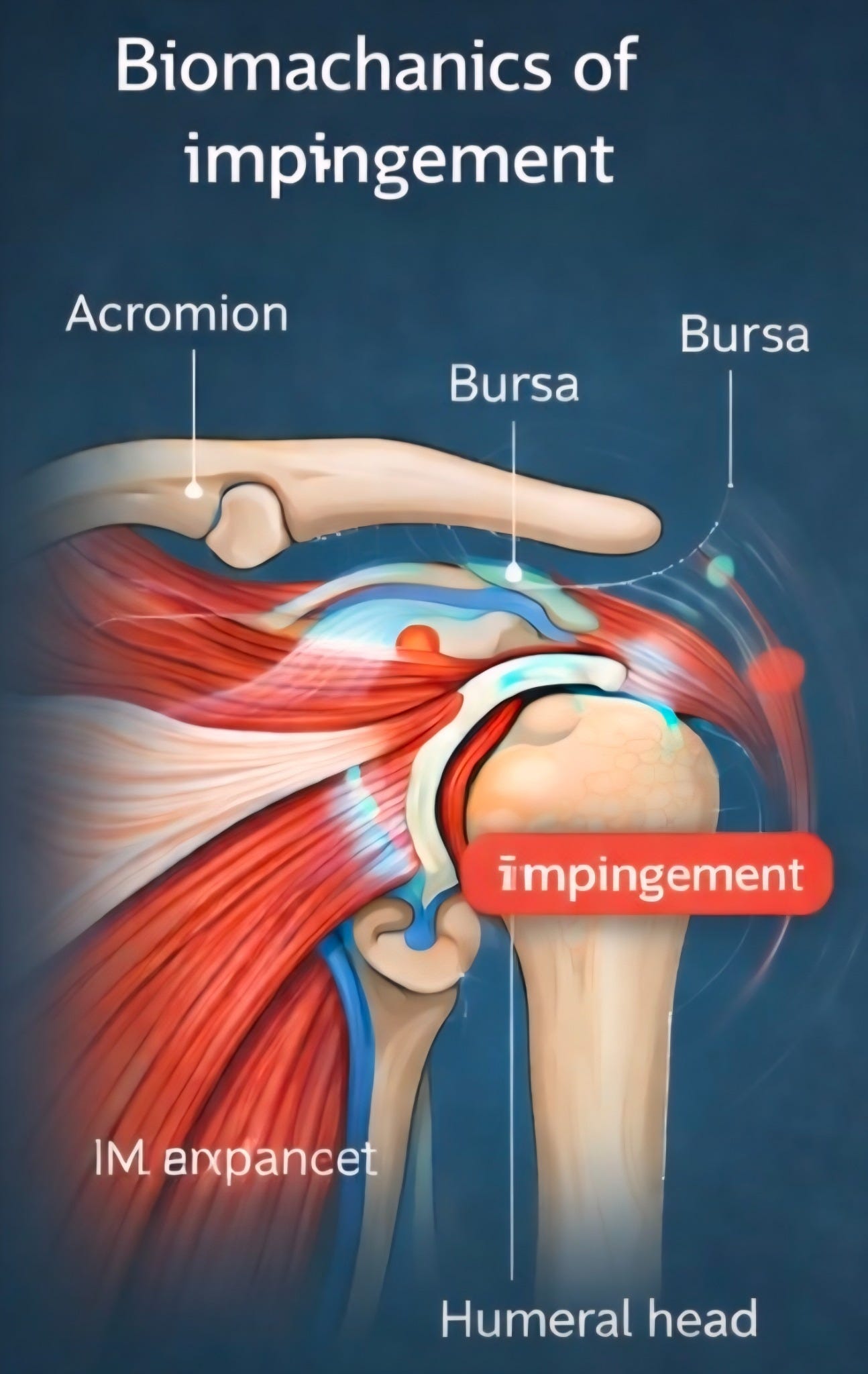
Pattern Recognition in the Shoulder
How sleep positioning creates chronic tension — and how to recalibrate it.

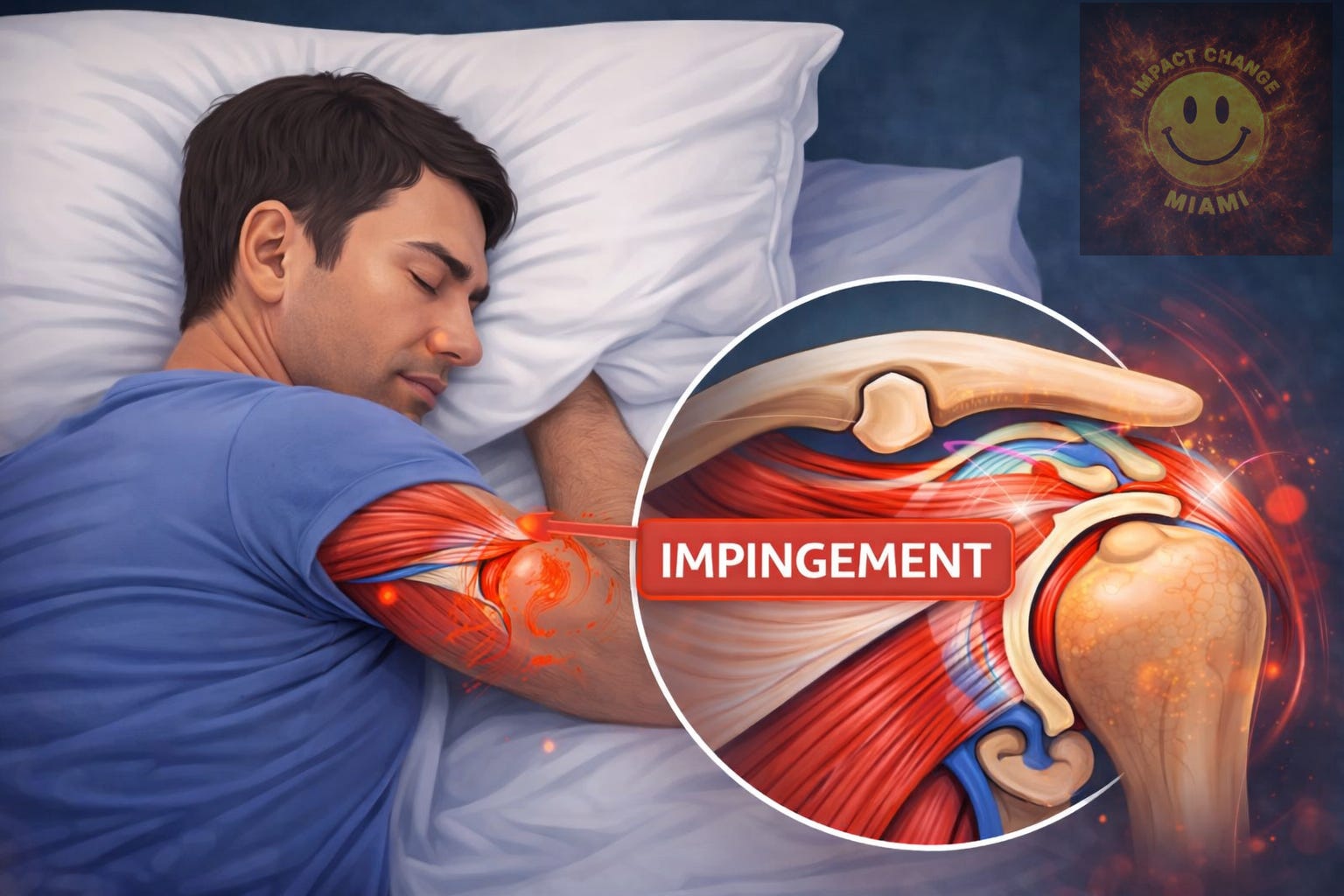
Pattern Recognition: Your Shoulder Is Learning While You Sleep
Recently, I had a conversation with my client, Erika Boom.
We were discussing shoulder pain — and the number of shoulders I work on every week.
As we talked, something became obvious.
Most of them aren’t injured in the gym.
They’re compressed at night.
Erica suggested I create content around it.
She was right.
Shortly after that conversation, I posted a reflection on my Instagram page, Impact Change Miami, about a clip I watched from the School of Hard Knox channel where Tony Robbins described:
Pattern recognition.
Pattern utilization.
Pattern creation.
He was speaking about business.
But I realized I had already been applying that same framework to the body for years.
Pattern Recognition
Many people wake up with shoulder stiffness.
They stretch it.
They blame workouts.
They assume it’s aging.
But what if the pattern isn’t in movement?
What if it’s in stillness?
When you sleep on your right side, you compress your right shoulder.
Night after night.
The joint rests in internal rotation.
The rotator cuff stays under load.
The scapula is pinned.
Blood flow is reduced.
You believe you’re resting.
Mechanically, you’re loading.
That’s pattern recognition.
What Actually Happens
Even during sleep, the nervous system maintains baseline muscle tone.
When a shoulder is compressed for 6–8 hours:
• Pressure receptors remain activated
• The brain increases protective tone
• Muscles stay partially contracted
• Fascia adapts to the shortened position
Over time, guarding becomes baseline.
Morning stiffness isn’t random.
It’s learned protection.
Long-Term Effects
Chronic side-loading may contribute to:
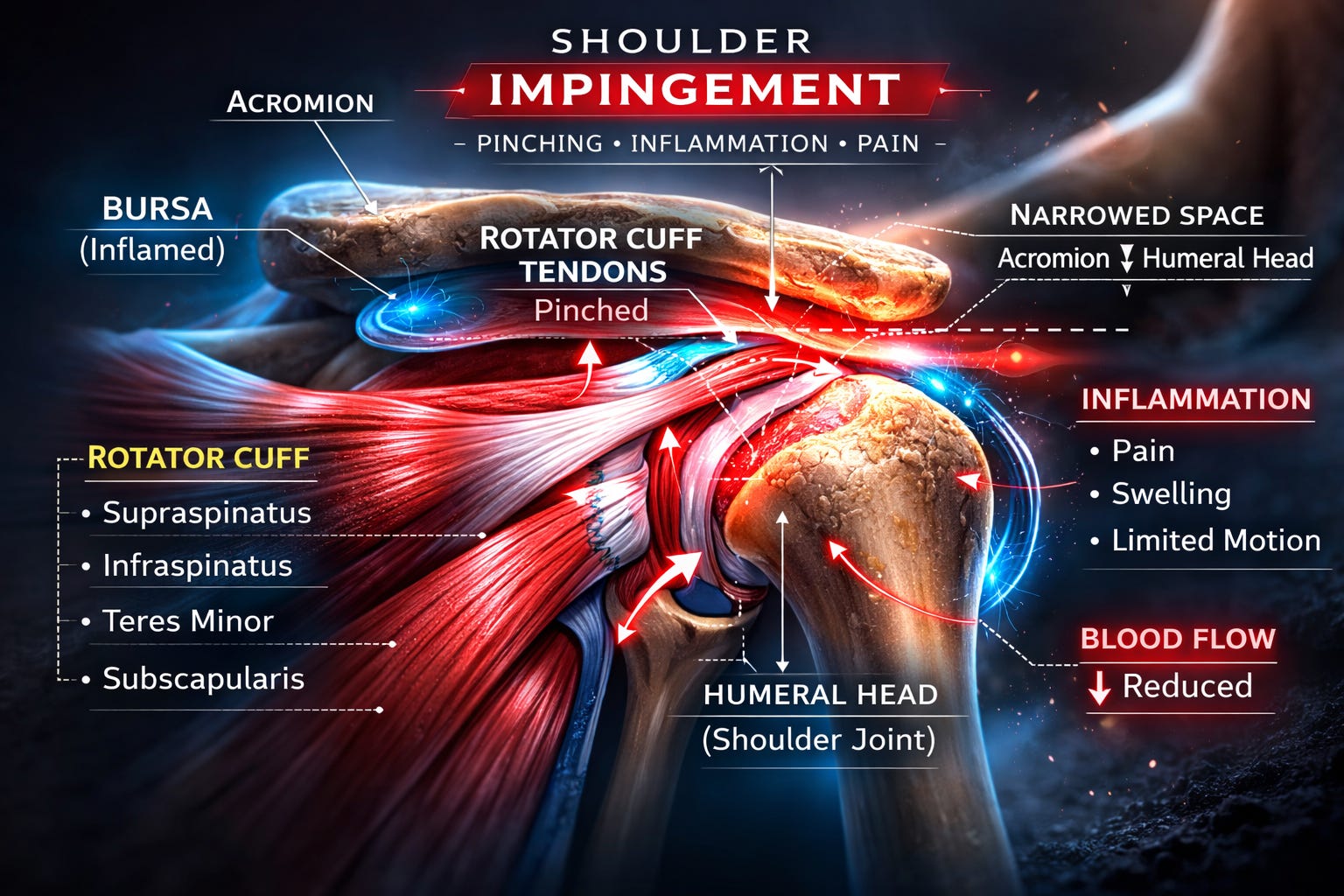
• Rotator cuff irritation
• Subacromial impingement
• Trigger point development
• Reduced overhead mobility
In persistent cases, prolonged guarding and decreased joint motion may increase the likelihood of adhesive capsulitis — frozen shoulder.
It rarely begins with trauma.
It begins with repetition.
Pattern Utilization
Instead of chasing pain, ask:
What pattern is repeating?
Can sleep positioning be modified?
Can the shoulder be offloaded?
Can the nervous system be guided out of protection?
Small changes interrupt patterns.
Pattern Creation
This is how NTR™ was built.
Recognize what repeats.
Utilize what works.
Create a better pattern.
Shoulder tension isn’t always weakness.
Often, it’s adaptation.
And adaptation can be recalibrated.
—
Alonso Sanchez
Founder, NTR™ Neuro-Tissue Recalibration
Impact Change Miami